
get 500+ free images, templates & marketing strategies! You're one click away, Don't Miss It.

Included Free:
550+ Templates, Photos, & Strategies
Get New Free Downloads Monthly
Unlimited Downloads
Special offers & Trends Newsletter
Save and sort your favorites
Access 500+ Free Templates, Photos, & Strategies With A Free Account
Free User Creation for Popup
By creating an account, I agree to Ivory Mix's Website terms, Privacy Policy and Licensing Terms
Already have an account? Log in
8 Steps to Plan a Month of Content Without Starting From Scratch Every Week
This post may contain affiliate links. Please read the disclaimer
If I had to guess, you probably don’t need more content ideas.
Most business owners I talk to already have a notebook full of ideas, screenshots saved on their phone, half written captions, and a long list of things they’d like to talk about someday.
The problem is usually figuring out what to create next.
That’s where content starts to feel overwhelming.
You sit down to write an Instagram post and realize you need an email too. Then you remember you haven’t updated your blog in weeks. Then Pinterest starts feeling neglected. Before long, content starts feeling like a dozen separate jobs instead of one simple marketing system.
What has helped me the most over the years is planning content around a few core topics and then finding multiple ways to use those ideas throughout the month.
Here’s exactly how I would do it.
Need Content Ideas First?
One question I hear all the time is:
“But what if I don’t even know what to post about?”
If that’s you, don’t worry. You don’t need to come up with all four content topics by yourself.
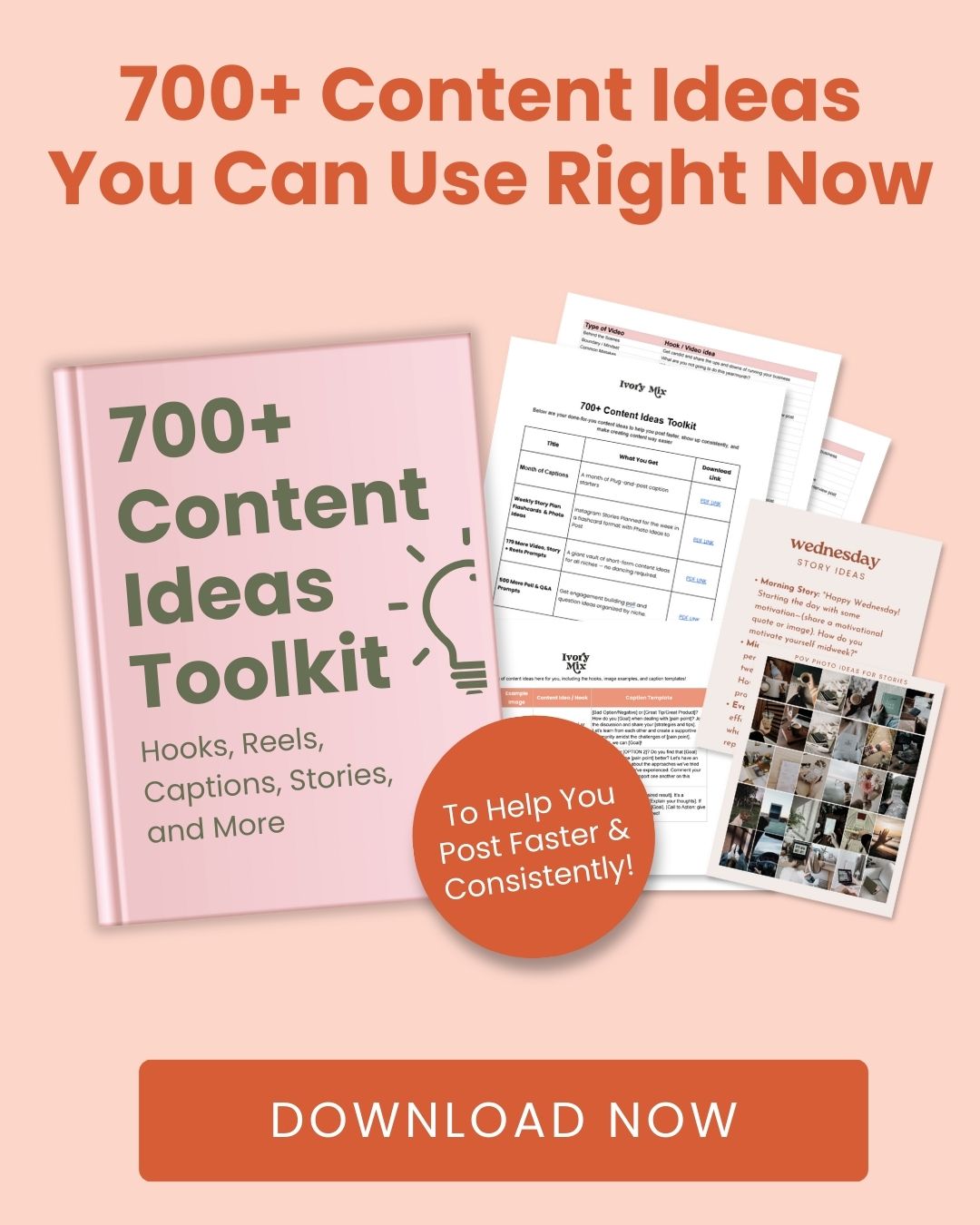
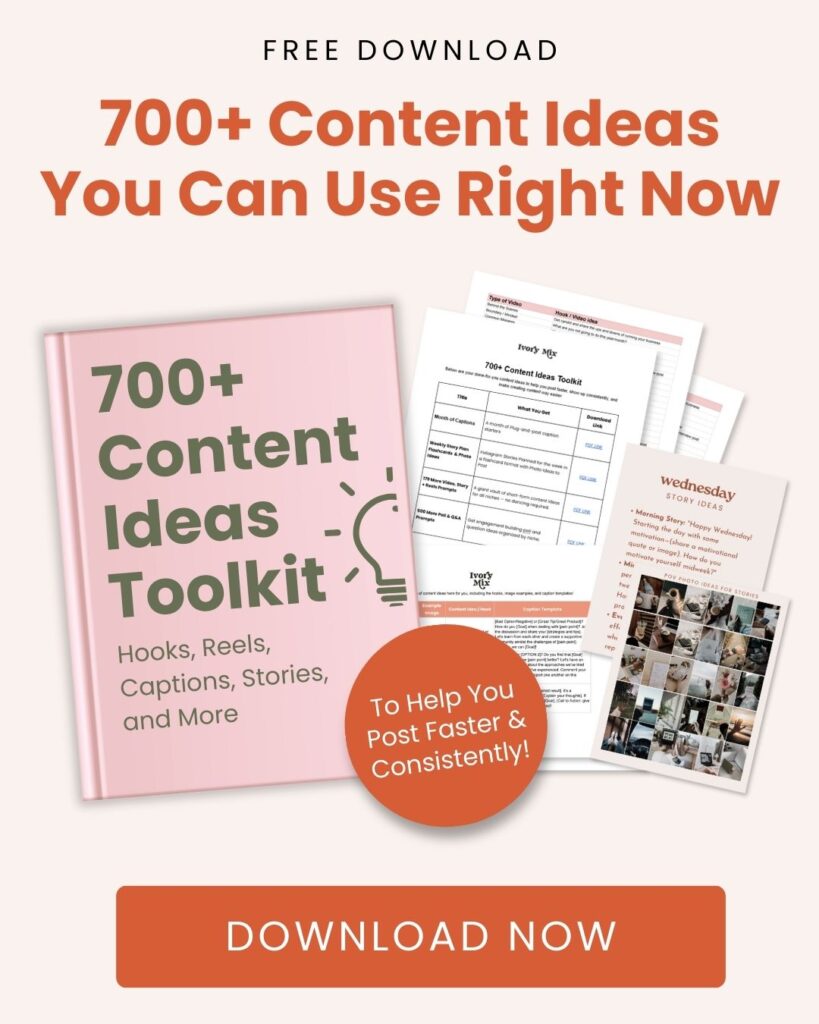
I’ve put together a free resource with more than 700 content ideas that you can use for Instagram, blogs, emails, Pinterest, YouTube, and more.
Inside you’ll find ideas for:
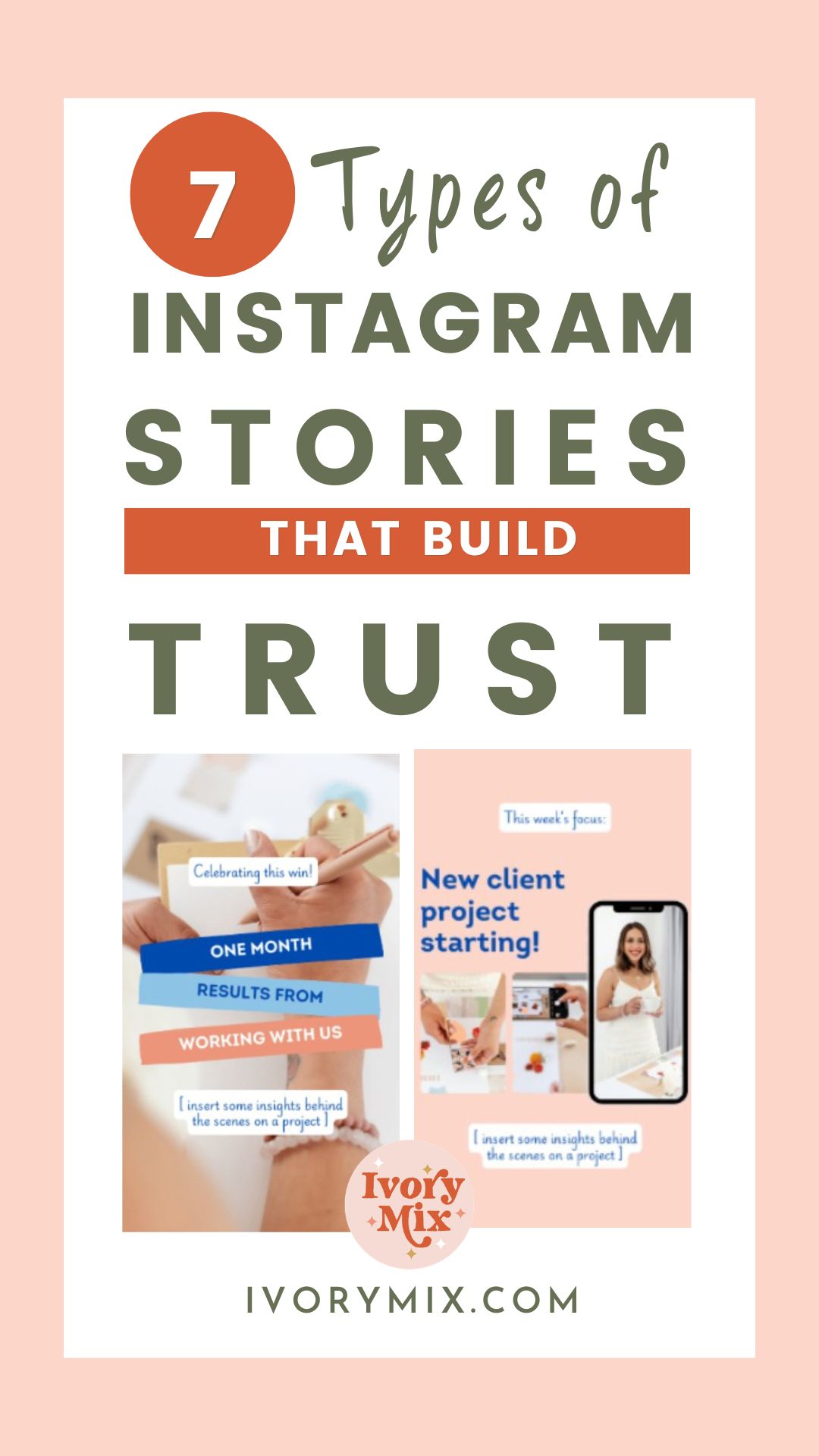
- Educational content
- Story based content
- Promotional content
- Engagement posts
- List style posts
- Seasonal content
- Authority building content
The best part is that you don’t need to use all 700.
Sometimes one idea is all you need to spark an entire month of content.
Make sure you Download this list of 700+ content ideas for your next content creation session!
Once you’ve downloaded it, come back to this post and I’ll show you exactly how to turn those ideas into a complete month of content.
Step 1: Choose 4 Main Topics
I think a lot of content creators put too much pressure on themselves to come up with brand new ideas all month long.
Instead, I like to choose four topics and build everything around them.
Since most months have four weeks, this gives you one topic to focus on each week.
For example, if you teach content creation, your topics might be:
- Content planning
- Repurposing content
- Email marketing
- Content organization
Or if you’re a health coach, your topics might be:
- Nutrition
- Movement
- Mindset
- Healthy habits
The goal isn’t to lock yourself into a rigid content calendar. You’re simply choosing the conversations you want to have this month.
Once you’ve decided on those topics, you’ll probably find that coming up with content gets much easier because you’re no longer staring at a blank page wondering what to talk about.
Step 2: Create One Core Piece of Content for Each Topic
For years, I approached content backwards.
I’d think about Instagram first. Then I’d need an email. Then a blog post. Then Pinterest pins.
Every platform felt like a separate project.
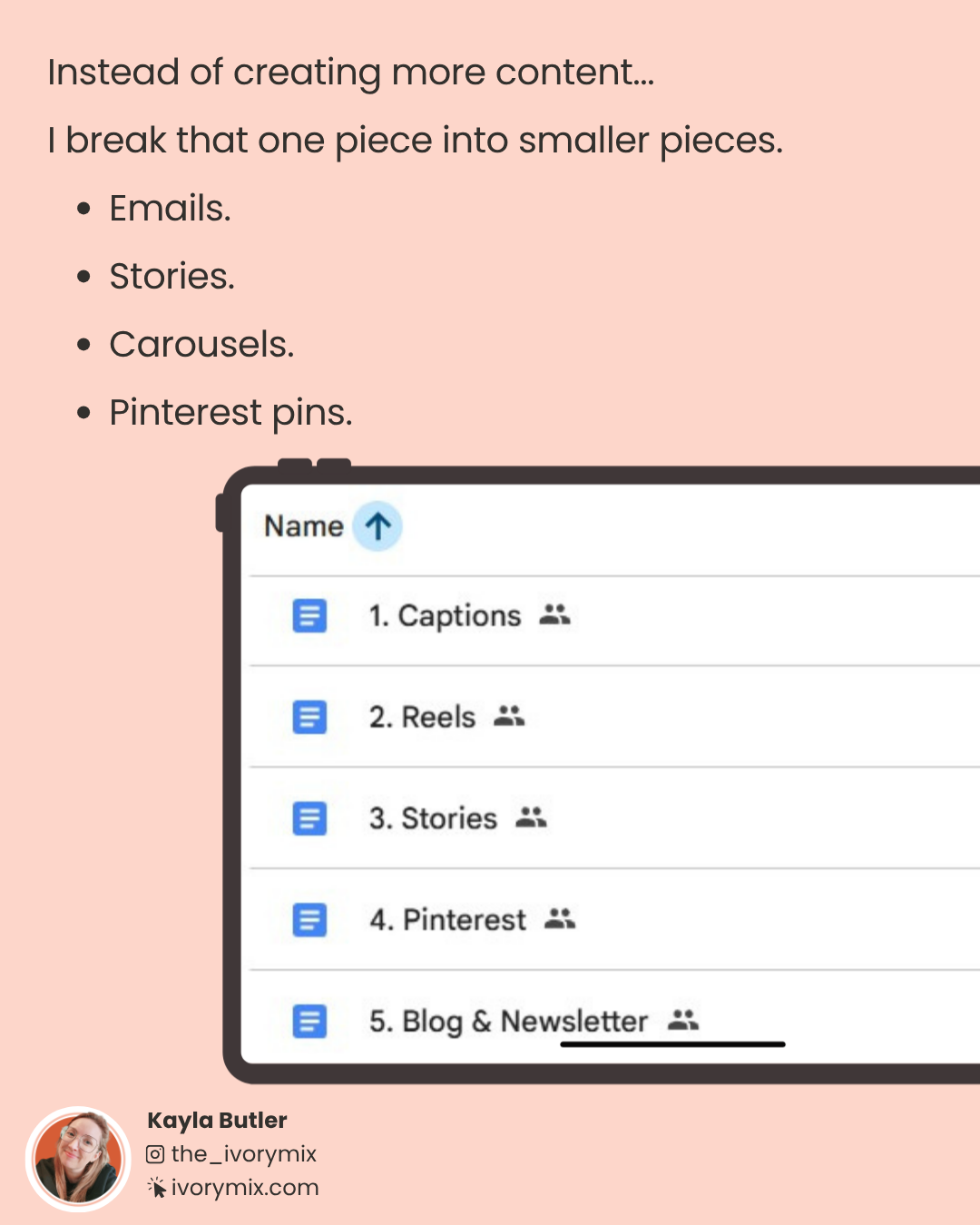
What works much better for me is starting with one larger piece of content and letting everything else come from that.
That core piece of content could be:
- A blog post
- A YouTube video
- A podcast episode
- A workshop
- A newsletter
For example, if your topic for the week is content planning, your core piece of content might be:
10 Steps to Plan a Month of Content
Now you’re not creating content separately for every platform. You’re creating one strong piece of content and using it as the foundation for everything else.
It feels simpler because it is simpler. Before you start planning a month of content, it helps to decide what your minimum content rhythm actually looks like. I shared more about this in my post on the bare minimum content strategy for building your online business, where I explain the simple approach I use when I want visibility without burnout.
Step 3: Break That Content Into Smaller Pieces
This is probably the step that saves me the most time.
I don’t know about you, but I used to write a blog post, publish it, and immediately move on to the next thing on my list.
Looking back, I was leaving so much content on the table.
Before creating anything new, take a look at the content you’ve already made and ask yourself:
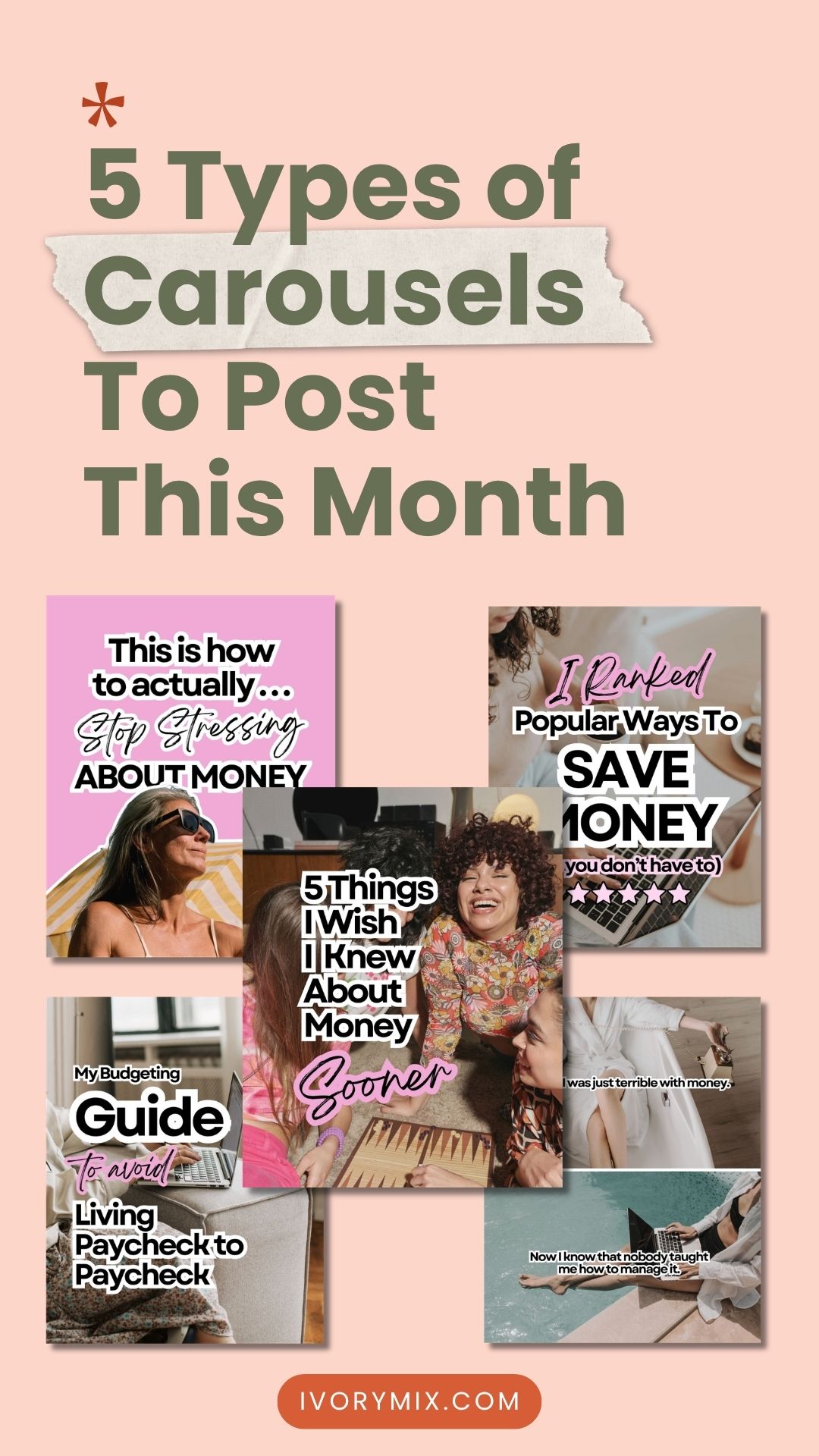
- What tip could become a carousel?
- What section could become an email?
- What lesson could become a Reel?
- What example could become a Story?
- What quote could become a graphic?
A blog post often contains weeks worth of content if you slow down and look for it.
Instead of constantly asking yourself, “What should I create next?” start asking, “What else can I create from this?”
That one shift can make content planning feel a whole lot easier.
Step 4: Build a Mix of Content Types
Something I’ve noticed over the years is that content starts feeling repetitive when every post is trying to do the same job.
Not every piece of content needs to teach.
Not every piece of content needs to sell.
Not every piece of content needs to inspire.
A healthier mix usually looks something like this:
Educational Content
This is where you teach something useful.
Examples:
- How to plan content
- How to write emails
- How to organize content ideas
- How to repurpose content
Encouragement Content
This type of content helps people feel understood and supported.
Examples:
- Lessons you’ve learned
- Mistakes you’ve made
- Mindset shifts that helped you
- Reminders your audience needs to hear
Story Content
People connect with stories much faster than they connect with instructions.
Examples:
- What worked for you
- What didn’t work
- Behind the scenes moments
- Client experiences
- Personal observations
Promotional Content
This is where you invite people to take the next step.
Examples:
- Your membership
- Your freebie
- A course
- A workshop
- A service
When you rotate through different types of content, your feed feels more natural and you stop feeling like you’re repeating yourself all the time.
Step 5: Decide Where Everything Goes
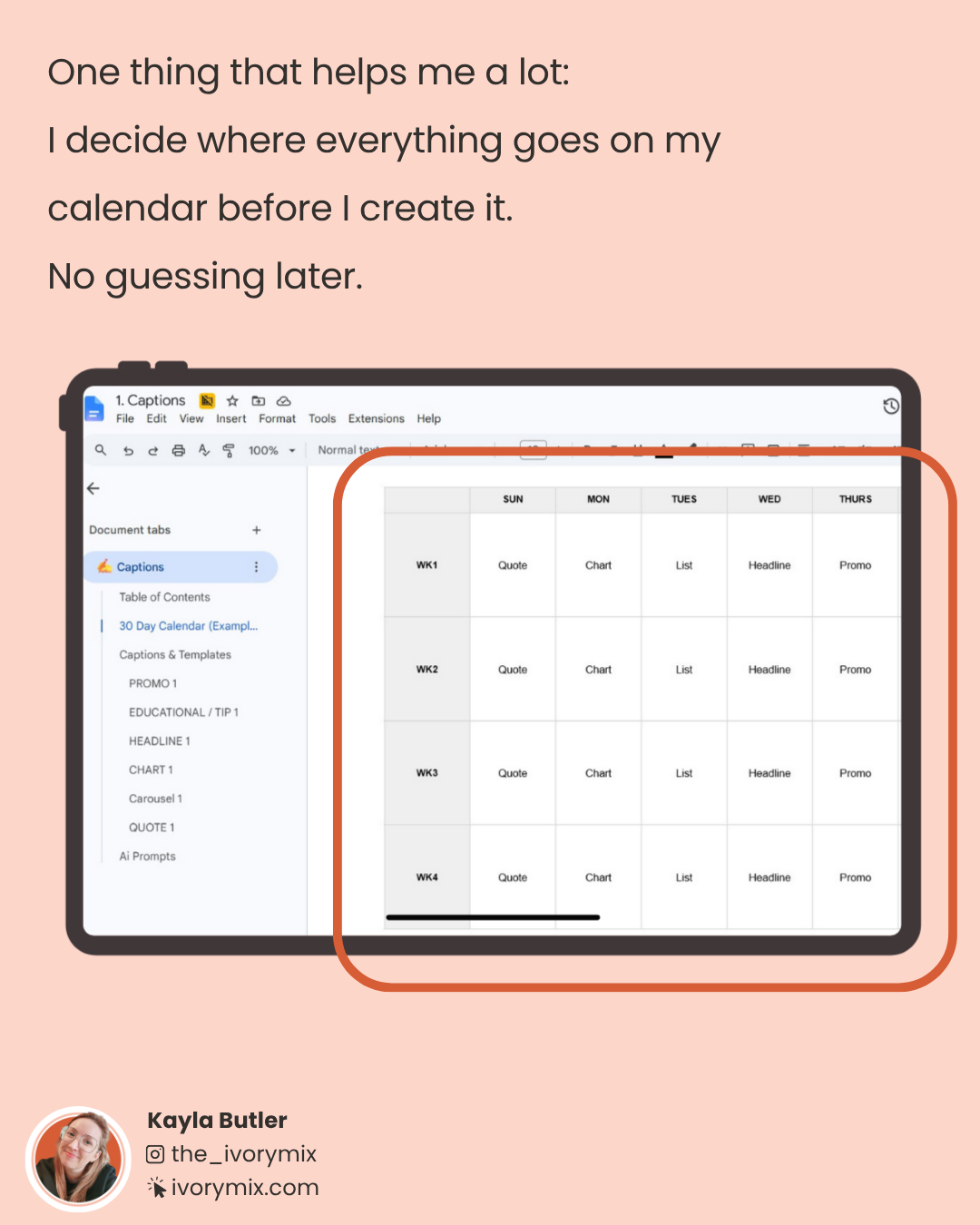
You don’t need a complicated content calendar for this part.
The important thing is simply knowing what’s coming next.
For example:
- Tuesday: Blog post
- Wednesday: Email newsletter
- Thursday: Instagram carousel
- Friday: Pinterest pins
When you sit down to work, you already know what you’re creating.
That might not sound like a big deal, but removing the constant decision making is often what makes consistency possible.
Step 6: Look for Repurposing Opportunities
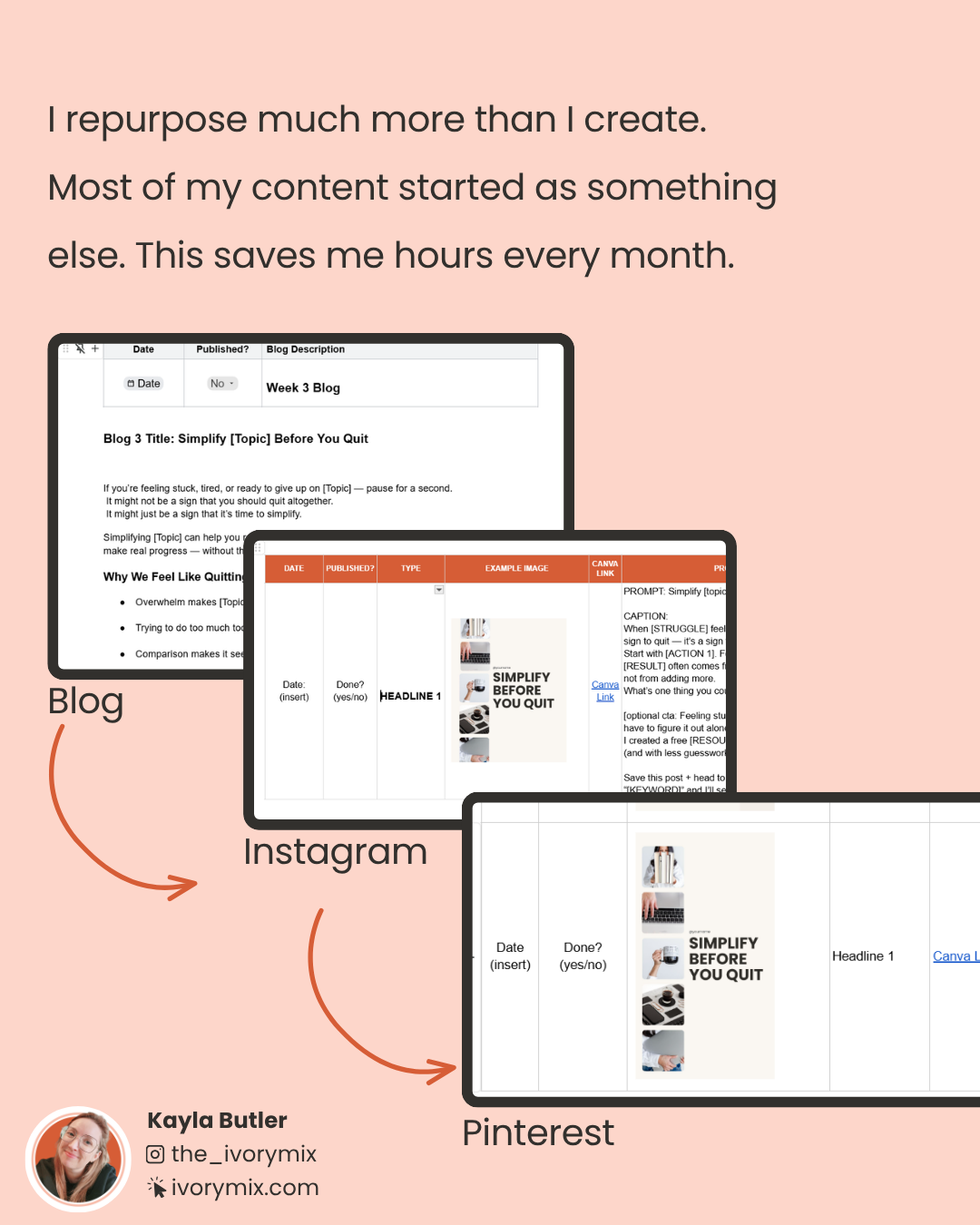
One thing I’ve learned is that content creation gets easier when you stop treating every platform like it needs completely different content.
Some of my emails started as blog posts.
Some blog posts started as Instagram captions.
Some Instagram posts started as questions someone asked me in Stories.
One idea can easily become:
- A blog post
- An email newsletter
- Multiple social media posts
- Pinterest pins
- Story content
- A video
You don’t need more ideas nearly as often as you think you do.
You usually just need more ways to use the ideas you already have.
Step 7: Keep a Content Library
I used to assume I’d remember good ideas.
Turns out, I was giving myself way too much credit.
Now if I think of a blog topic, content framework, Story prompt, email idea, or something interesting I notice in my audience, I save it immediately.
Over time, those ideas start building into a content library that you can pull from whenever you need it.
I honestly think this is one of the most overlooked parts of content creation.
When you have a library of ideas, you’re no longer relying on inspiration to show up every time you need to create something.
You’re working from a collection of ideas you’ve already gathered.
Step 8: Leave Room for Real Life
One thing I would avoid is creating a content plan that’s so structured that there’s no room left for being human.
Leave space for:
- Behind the scenes moments
- Personal updates
- New ideas
- Things happening in your business right now
- Conversations with your audience
Some of the best content you’ll create was never on the calendar in the first place.
A content plan should give you direction.
It shouldn’t make you feel trapped.
What I’ve Learned About Planning Content
What I’ve learned over the years is that consistency usually isn’t an effort problem.
Most of the time it’s a system problem.
When you have to reinvent the wheel every week, content feels exhausting. But when you have a few core topics, a plan for repurposing them, and a place to save your ideas, content starts to feel much more manageable.
You don’t need to create more.
You don’t need to post everywhere.
You don’t need a hundred new ideas every month.
You just need a simple system that helps you get more mileage out of the ideas you already have.
Want Help Building a Simpler Content System?
If you’ve ever felt like you’re constantly starting over with your content, you’re not alone.
That’s one of the reasons I created the Ivory Mix Membership.
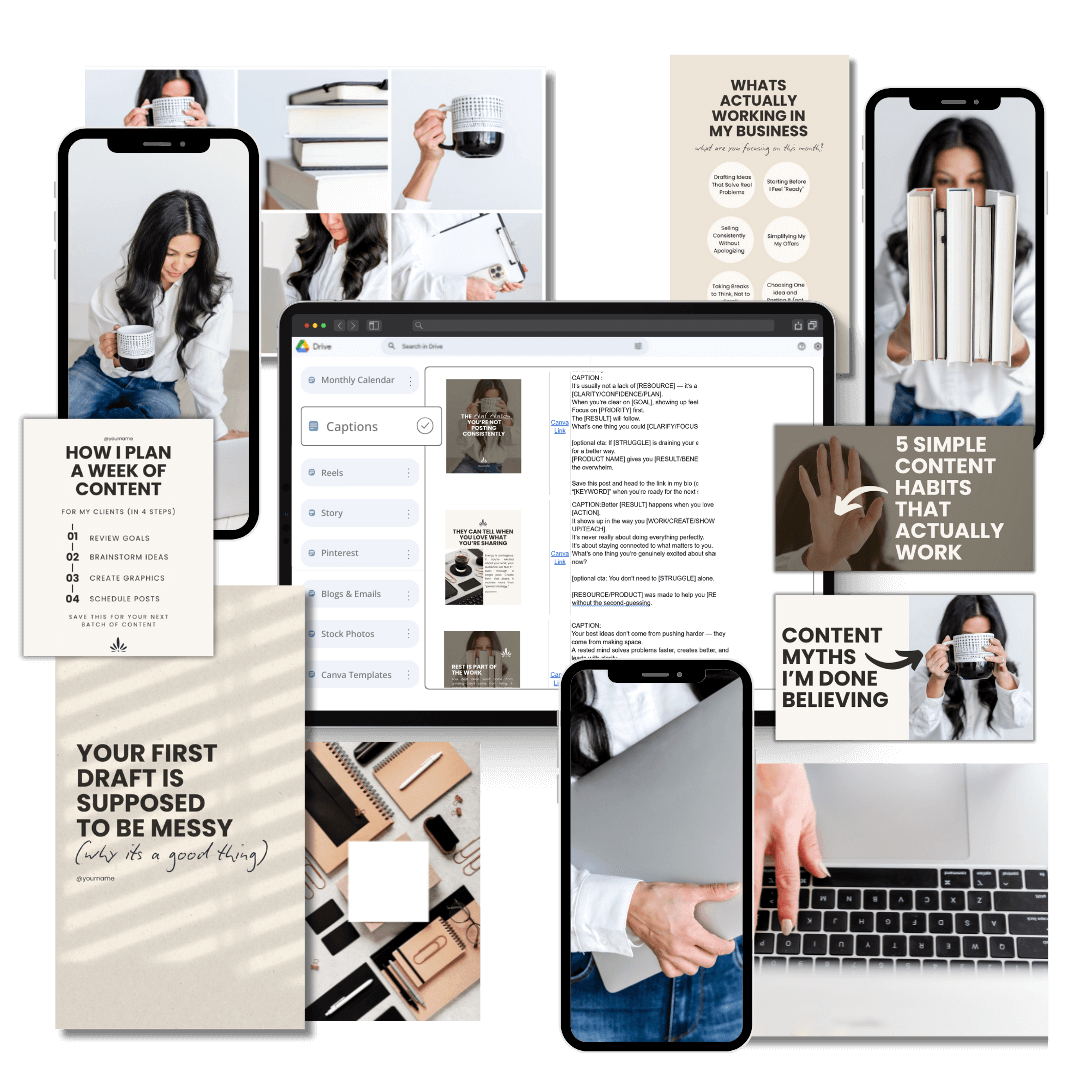
Each month, members receive ready to use content, templates, PLR, blog ideas, emails, stock photos, and planning resources that make it easier to stay visible without spending all your time creating from scratch.
The goal isn’t to help you create more content.
It’s to help you create content more easily.
Learn more about the Ivory Mix Membership below 👇

Included Free:
550+ Templates, Photos, & Strategies
Get New Free Downloads Monthly
Unlimited Downloads
Special offers & Trends Newsletter
Save and sort your favorites
Access 500+ Free Templates, Photos, & Strategies With A Free Account
Free User Creation for Popup
By creating an account, I agree to Ivory Mix's Website terms, Privacy Policy and Licensing Terms
Already have an account? Log in